Showing posts with label Australian Tour 2015. Show all posts

Tuesday, August 11, 2015

Thoughts about the UK tour

Back home in Australia there is now opportunity to reflect on the two over 60s cricket tours in the UK during June and July 2015.

There were a number of team  milestones achieved by the Australian over 60s team:
  • Winning 11 of the 14 County games played
  • Winning the Test Match against Wales convincingly 
       and definitely
  • Winning two of the three Test Matches played against England including the two day game at the end of the tour
For Robin there were a number of personal milestones:
  • The opportunity to play cricket in England
  • The opportunity to play cricket in England for Australia
  • Playing in two Test Matches for Australia
  • Opening the bowling for Australia in one of the County games
  • Opening the batting for Australia in one of the County games
  • Owning a baggy green with a number 
For me it was great being able to travel with both the teams, meet the other players and their partners, watch the games played on attractive grounds as well as explore parts of England.

Generally the cricket grounds on which the matches were played were great. Even in small villages the games were played on turf wickets and well tended outfields. As can be seen from most of the posts about the matches the grounds were usually in picturesque settings.

Transport
For the Australian tour we hired a number of cars to carry the players plus a van to carry the gear. The aim was to provide flexibility especially on rest days allowing people to go in different directions. During games the WAGS could also use a car to go exploring. Generally this worked well except that only a limited number of people were designated drivers. This placed additional strain on match days for the driver as sometimes it could take one and a half hours to drive to the ground where the match was played. Often the driver would then play cricket and after the game would have to drive back to the hotel.

For the VOSCA tour we had a coach and driver to take us to the hotels and games. We were very lucky as we had a great driver, Steve, who would sometimes, during a game, drive the WAGS to a nearby location so they could do some exploring, and then collect us two or three hours later. Steve also took us on the scenic route when we travelled from one hotel to another including stop-overs at places to explore. This provided us with much of the flexibility we had with the cars without the players having the strain of driving. This, of course, may not have been the case with another driver.

Weather
Basically the English summer that we experienced was similar to late autumn in Melbourne. The temperature was normally in the mid to high teens, occasionally low twenties. It was often overcast. On many days there was a very cold wind for at least part of the day. We were lucky with the Australian tour as it mainly rained on rest days. Rain did shorten one match but there was still a result while on another occasion the rain started just as the game finished. The VOSCA tour was not quite so fortunate as two games were washed out. There was light rain during another game but the players only came off the ground once. There were three days of what we would call summer at the end of June with temperatures in high twenties and low to mid thirties. On one day the temperature reached 35 degrees in London. These days came out of the blue taking everyone by surprise, especially as the English do not use air conditioning.

Food
With all the English cooking programs it is disappointing that much of the food served in hotels and pubs is mediocre. What we really missed were vegetables. Vegetables, when provided were lots of potato (chips, mashed, boiled or occasionally baked) and peas (normal or mushy). Occasionally carrots were served and once we were offered cauliflower and broccoli. Breakfast was another issue. Most of the hotels provided a hot breakfast but for those wanting a continental breakfast the choice was usually limited. I normally have muesli, fruit and natural yoghurt for breakfast. There was no guarantee that any of these would be available. In the end I resorted to binging my own fruit to breakfast. There is a wide variety of fruit and vegetables available in the shops - just limited in restaurants.

The other thing that we noticed was that curry seems to be becoming the national dish in the UK. During the first week we had curry for dinner four times!

Accommodation
We stayed in a variety of accommodation during the two months in the UK. Generally the hotels in which we stayed during the Australian tour were old mansions converted to hotels. On the VOSCA tour most of the hotels were Travelodge (plus a couple of other chains). Generally the rooms were fine but the problem faced in most of the hotels was lack of air conditioning resulting in stuffiness in the rooms. We immediately opened the windows to let in some air but often outside noise meant that the windows needed to be closed if you wanted to sleep. If the corridors had no windows they were worse. However all but one of the hotels had a central location making it easy to explore the local area.

Having a shower can also be a challenge as each hotel seems to have a different set-up. Most of the hotels with the shower in the bath provided safety rails and non-slip surfaces, but not all. There are also many varieties of taps.

Another challenge, when travelling with medication requiring refrigeration, is that most hotels in the UK do not have fridges. All the hotels allowed my medication to be kept in a staff fridge but one hotel refused to put my freezer pack in a freezer for OH&S reasons!

General observations
There is history everywhere you go.

The British love their dogs. There are dogs everywhere.

Prices are expensive, especially food and drink.

There are lots of different shades of green in the English countryside.

During summer the cities, towns and villages all have vivid displays of flowers in containers and hanging baskets.

It was a great two months. Lots of cricket but also lots of sightseeing. At the team dinner at the end of the Australian tour we were all asked to give our views about the tour. The general consensus was that not only was it was great to have the opportunity to play cricket in England but also more importantly the players, at the age of 60 plus, were able to participate in such a tour. This sentiment also applied to the VOSCA tour.

Thursday, August 6, 2015

Australian over 60s team tour of England

Link to official photo on Seniors Cricket Australia website.
Link to match reports on Seniors Cricket Australia website.

The members of the Australian over 60s cricket team that toured England in June 2015 were:
  • Colin Cooke [Qld] captain
  • Murray Harrison [ACT] vice captain
  • Rex Bennett [Vic]
  • David Cordy [Vic]
  • Robin Court [Vic]
  • John Dedman [ACT]
  • Phil Drescher [Qld]
  • Greg Johnson [Vic]
  • Neil King [Vic]
  • Pat Logue [Qld]
  • Graeme McIlwain [Qld]
  • James Martin [ACT]
  • Kevin Meikle [Qld]
  • Ian Pethwick [Qld]
  • Greg Quinn [SA]
  • Brian Scott [NSW]
  • John Stackpoole [Qld]
  • Ian Southall [Vic]
During the four week tour the team played 18 games. They won 11 of the 14 county games played. On this tour the games were played against the southern counties. There were also four test matches. The Australians defeated Wales in a one day game. They also won two of the three games played against England including the final match which was played over two days. It was a great effort by the team.

Six WAGS were on the tour for the first three weeks - Anne Harrison, Jill Drescher, Mandy Logue, Annette McIlwain, Sharon Scott and Vicki Court. During the final week we were joined by four more WAGS - Geraldine Southall, Geraldine Bennett, Leanne Cordy and Karen Meiikle.

Wednesday, July 8, 2015

Last game and test decider against England at Sunbury on Thames

Our eighteenth match was a two day test match at Sunbury on Thames on 2nd and 3rd of July. Each team was to bat 80 overs with the game starting at 11 am. Once again the route to the ground took us near the Hampton Court Flower Show so it was an early start both days.
A sign near the bell shows that this ground was opened by Sir Leonard Hutton in 1959.
The cricket ground is part of a larger sporting complex.
The Sunbury Cricket Club was formed in 1938.
As this was a test match the team posed for their official photo.
The Australian Cricket Board had arranged for Catherine to record the proceedings of the match and there was also a reporter from Sky TV so there were additional, larger, cameras present when the national anthems were sung.
On the first day Australia batted and was all out for 263 runs in the last over of the day's play. England had bowled and fielded well making it difficult for our batsmen to make big scores. However, as the saying goes, we had the score on the board.
On day 2 Ian Caunce and Nigel Bloch opened the batting for England and got off to a good start assisted by several dropped catches despite some excellent bowling. The score reached 105 before James Martin took Caunces' wicket. The momentum changed as Phil Drescher joined the bowling attack and the score quickly became 2 for 105 then 3 for 108. At lunch England was 4 for 125. When the batsmen returned to the crease after lunch they now wore helmets instead of caps which was probably just as well Rex Bennett was bowling and in 8 balls took 3 wickets for only one run. The remaining English batsmen tried hard but the game was over after 51 overs with England all out for 192.
Australia had now won two of the three test matches against England and consequently the series.
Needless to say there were some very happy Australians after the game.
It was the end of a great tour with Australia winning 11 of the 14 county games played, a test match against Wales for the first time and, of course, two of the three test matches against England.
During the afternoon of the first day I went for a walk exploring the local area. Public access on this side of the river is limited but I did find a few places where the river could be enjoyed.
Rivermead Island is a grassy stretch of land reached by a small bridge. There are some very large trees on the island.
Large aeroplanes often flew over the ground on their way to or from Heathrow Airport.
For the players the hectic, but most enjoyable tour was over. Some were going home while others were visiting other parts of the UK or Europe first. For us, we moved from Hounslow to Sunbury on Thames to join the members of the Victorian over 60s team who had arrived for a tour of other counties in England. Our cricket holiday in England continues.

Tuesday, July 7, 2015

Game 17 against Surrey at East Molesey

We left early as we had been warned that the traffic would be heavy due to the Hampton Court Flower Show at Hampton Court Palace. The warning proved to correct as we passed long queues of cars lined up waiting for admittance.
We were not the first Australian team to visit this club as the walls of the club rooms proudly display a photo and board naming the members of the 1953 Australian team who played there including Lindsay Hassett, Richie Benaud, Ray Lindwall, Don Tallon and Keith Miller. 
Cricket has been played in this area since the 1730s.
The club has its own coffee shop, Thyme by the River, where you can purchase great ice cream. The day we were there the temperature rose to the mid 30s so they did good business, not just from those at the game but also from anyone walking by the river.
The river path runs along one side of the ground.
It is a tranquil spot.
However there was a game of cricket to be played.
The players checked the pitch
posed for yet another photograph and then the game began.

Australia batted first and could only manage 6 for 196 at the end of 45 overs. Pat Logue was the only player to score 50. Because of the hot weather drinks were taken at every 15 overs. Surrey passed our score with two overs to go. Obviously Australia did not make enough runs when batting however an accumulation of dropped catches and poor fielding where a possible run became four runs did not help. The only good thing from the match was that there were no more injuries to players and those with existing injuries got through the game. We headed back to the hotel ready to face England, the big challenge, the next day.

Hounslow

On 30 June we left Tunbridge Wells, which we had only glimpsed from the car while driving to and from matches, and drove to Hounslow where we stayed at the Shalimar Hotel.
 Most of the players went for a tour of The Oval and lunch in The Committee Room.
Robin at The Oval
The previous night we learned that a decision had been made to make this a player only event although originally it had been open to anyone on the tour. Therefore Robin and the others went by train to The Oval while I stayed to explore Hounslow.
Hounslow is a suburb of London with a large proportion of the population from India and Middle Eastern countries. It is also beneath the fight path of aeroplanes travelling to and from Heathrow so it can be a little noisy at times.
I found the local library and also a place selling New Zealand ice cream.
The famous red London buses are everywhere.
Most of the housing is terraced houses.

Game 16 against Sussex at Horsham

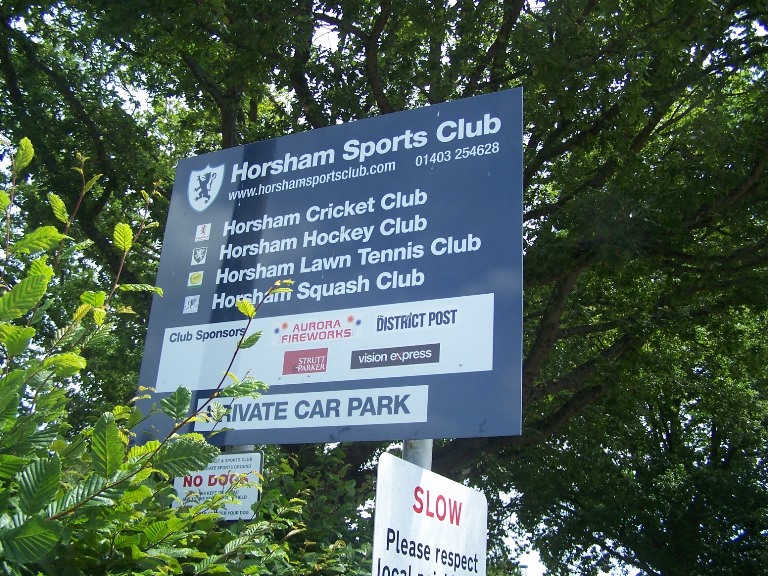
Off again, this time to Horsham Sports Club, another multi-sporting complex.
It also had impressive club rooms and an attractive cricket ground.
Australia batted first with John Stackpoole, Neil King and Pat Logue retiring at 50. At the end of the innings Australia had compiled 2 for 286.
Australian also bowlers performed well with Brian Scott taking 3 wickets for 27 off 9 overs, John Dedman had 3wickets for four runs and Neil King had 2 wickets for 7 runs. John Stackpoole as wicket keeper for the game had 3 stumpings. A great effort all round.
Sussex were all out for 151.
 During the game I went for a walk to the town and also explored the area around the ground.
I also met some of the local inhabitants.

Monday, July 6, 2015

Game 15 Second Test against England at Middleton on Sea

We left our hotel in Tunbridge Wells
and after an hour and a half drive from Kent to West Sussex we arrived at Middleton on Sea, near Bognor Regis.
The Middleton on Sea Sports Club covers tennis, lawn bowls, squash as well as cricket.
The club rooms are impressive and the staff had worked hard to publicise the event and ensure all went smoothly. Unfortunately as one person commented, 'The weather is not great so we don't expect many to turn up.'
The Australians had their normal warm up session
posed for photographs
and the national anthems were sung. The singing of Advance Australia Fair had improved greatly compared with the singing at the earlier tests.
Australia batted first. They were 3 for 40 when Phil Drescher came out to bat. The fourth ball he faced was hit out of the ground and not found. Phil's 67 runs included 4 sixes. Australia had made 217 runs - definitely not as many as we would have expected to make.
England also got off to a shaky start and were 3 for 31 after 13 overs. Although Robin and James Martin suffered leg injuries during the match the rest of the bowlers worked hard with success and England could only make 9 for 190 at stumps.
It was a great Australian victory and the first time that an Australian over 60s side had defeated England.
During the game I went for a walk to check out the beach.
It was low tide and there were few people at the beach except for those walking dogs.
Like many beaches in England there were pebbles, not sand.
Erosion has been a major problem and a number of solutions have been tried over the years.
Along the road back to the cricket ground here were a number of houses with colourful gardens.