Tuesday, August 30, 2011

Bath

Sunday 14 August
First stop was a visit to the Roman Baths and Temple and we spent a couple of hours learning about the site rediscovered in 1880. Part of the site, above floor level, has been reconstructed.
The hot springs had been a place of worship in Neolithic times and when the Romans arrived they built the bath houses and Temple.
Hypocaust for underfloor heating of Roman buildings consisting of pillars called pilae stacks made of tiles and concrete under the floor. Warm air flowed through the gaps to heat the floor.
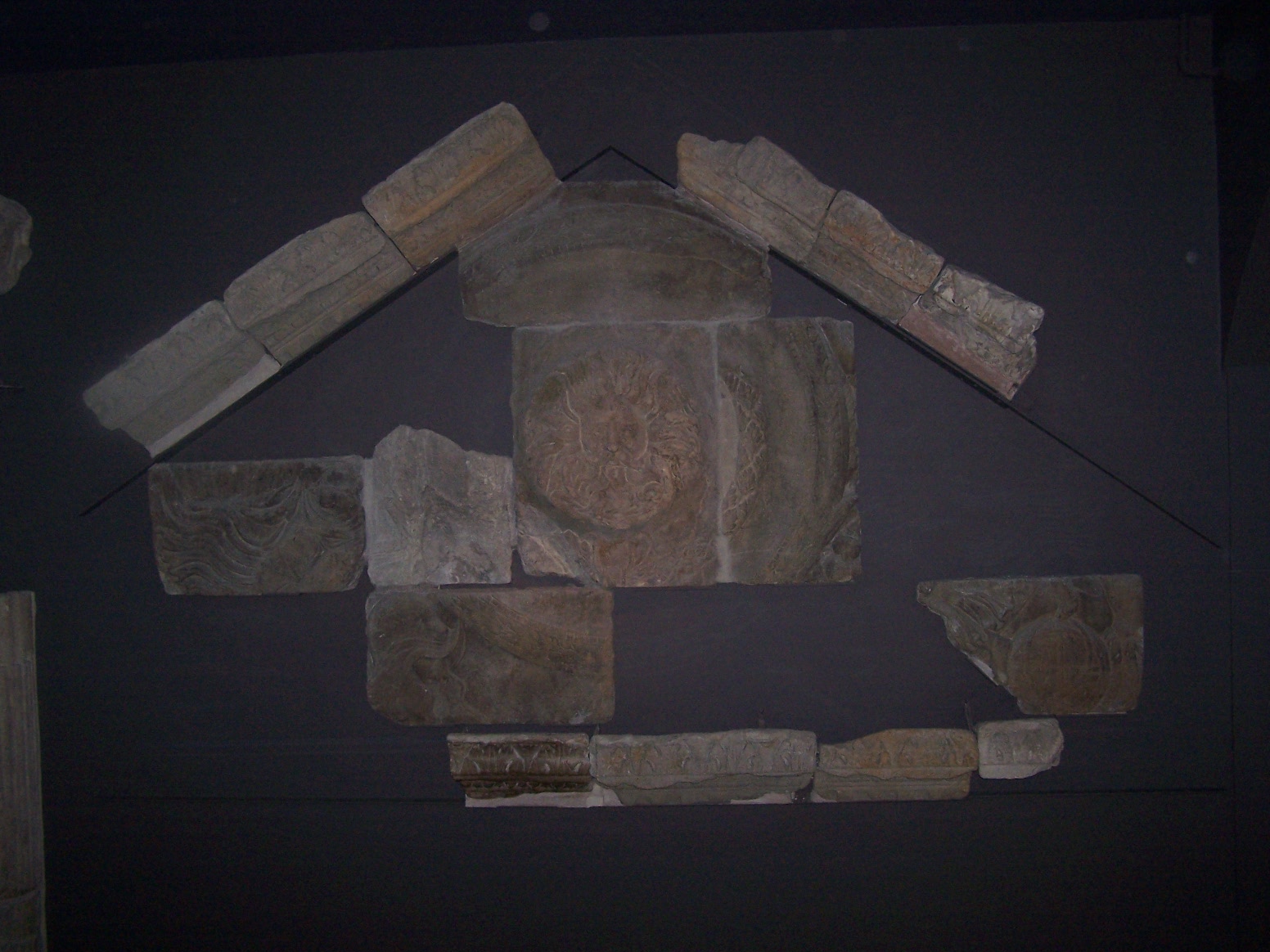
Remains from the Temple wall are on display.
Part of a ceramic floor found on the site
When they left Britain the buildings fell into disrepair and were also possibly destroyed by Christians. The hot springs once again became a focal point in the 17th century when spas and baths such as the King's and Queen's Baths were built on the site of the springs over the Roman buildings and used largely for health treatments. In the 18th and 19th centuries people regularly came to Bath to 'take the waters'.
The Pump Room was a place where people went to drink the warm spring water as a 'cure'. This building was rebuilt in 1797.
Today the building is a restaurant though the waters can still be tasted there.

The Jane Austen Centre  was the next stop providing an interesting insight into the life of this nineteenth century author and the two books she set in Bath, Northanger Abbey and Persuasion.
We then went to the Assembly Rooms but decided not to visit as only two of the smaller rooms were open to the public due to the ballroom being used as part of a fashion exhibition. We could view the room if we were prepared to pay four times the general admittance charge even though we did not want to view the fashion exhibition.
Instead we went to the Building of Bath Collection  for an introduction to the architecture and construction of the current city in the eighteenth century.

In the afternoon we went for a walk by the Avon River,
watched, in a wonderful setting, part of a ladies' cricket game between Bath and Bournemouth seconds teams
and watched part of a concert by Cricklade Band, formed in 1887, at the bandstand in Parade Gardens.
The sun came out in the afternoon so there were blue skies and at times it was pleasantly warm.

Penarth to Bath

Saturday 13 August
The hotel provided views of the Cardiff docks area.

Before we left Wales we drove to Penarth for some family history exploring. First we went for a walk along the cliffs
then drove along Wordsworth Avenue taking some atmospheric photos
before trying to locate the location of the toll gate near the river. Unfortunately there is no apparent indication of the location of where the toll gate once stood.

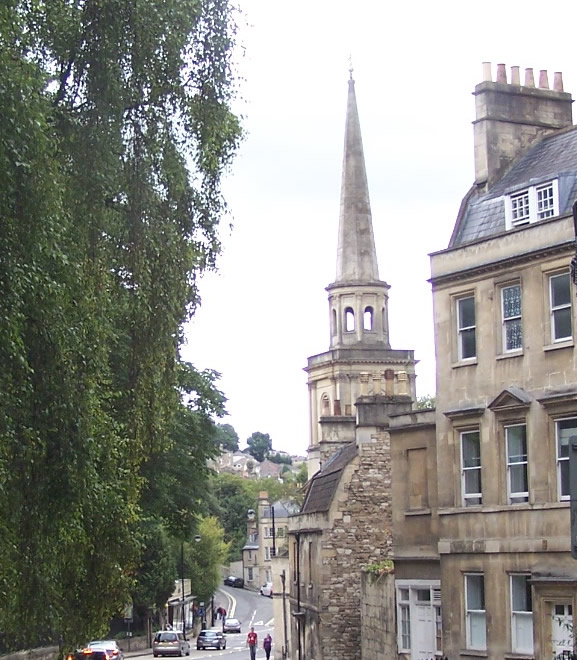
We then drove to Bath and after checking into the hotel went for a walk around the city following the City Trail brochure. Sites included Royal Crescent,
King's Circus,
Assembly Rooms, St Swithin's Church,
Building of Bath Collection, Guildhall,
Great Pultenay Street, Pultenay Bridge, North Parade Bridge,
Bath Abbey,
Roman Baths and Pump Room and Theatre Royal .
The walk helped us better to understand the layout of Bath as well as provide an introduction to the city.

Dinner was at Jamie's Italian restaurant and was delicious.

Cardiff and Penarth

Thursday 11 August
Drove to Monmouth in Wales to spend part of the day with Marilyn, discuss family history etc. We then continued to Cardiff.

Friday 12 August
Another grey overcast day with occasional drizzle but fine at first so decided to explore Bute Street while the weather held.
Census records show that members of Robin's family lived in Bute Street and Bute Street West and also in James Street so we set out to explore this area and parts of the docks where some of the men were employed.
We then visited the Bute Street History and Arts Centre and spoke to Mari, a PhD student at Cardiff University writing a thesis on Bute Street and the wharves. She located information about The Ship Inn once owned by one family member.
Mari recommended that we visit the Pierhead Building  for an exhibition on the area including an excellent short film on the history of the wharf area. When we were in Cardiff the building was being renovated and covered with scaffolding. The Pierhead Building  has been a significant building in the Cardiff Bay docks area since 1897. The guide recommended a walk around the dock area and when we said that we planned to visit Penarth she told us how to walk there via the barrages - an interesting walk.
Once at Penarth we walked up the hill
 
and then down to the Penarth Pier where we ate a chip butty before returning to Cardiff.

Cardiff flourished during the nineteenth century largely due to the exportation of coal. It was an extremely busy port. Information boards on the barrages provide an account of the activities.

Malvern district

Wednesday 10 August
At 5.30am heard a commotion of ducks and looked out the window to see what appeared to be all the ducks scurrying from the pond across the grass under the oak tree to somewhere known only to them.

This was to be a family history day. It began with a visit to Mathon Street where Robin and his family had lived.
The next stop was Malvern College  where the Telecommunications Research Establishment  was stationed from May 1942 until the end of the war. The archivist was not at the school until Friday but we were given permission to walk around and take photos.
We located the site where a photograph in our collection was taken during the war. The door has changed but otherwise the building is the same.
We then went to the Malvern Museum of Local History . They were unable to locate their folder on TRE but had some information in one of the display rooms. We purchased a book by a scientist who had worked at TRE and then had a look around the museum displays. Pale Manor was mentioned as another TRE location so we went back to the information office where Anne told us where to find the house.
After taking a photograph of the house we then started the search for other family connections.

At Cropthorne
we visited St Michael’s Church
and found two gravestones for members of the Guise family. We could not locate the names of people that we knew but the inscriptions on many of the graves have long disappeared.
The church was opened for us to see inside and we were told that Guise was a common name in the area.
There has been a church on this site since Saxon times with the current building more than 1,000 years old. It is a beautiful church and one wall includes part of a medieval mural that was whitewashed at one time and was unable to be fully recovered.

The next stop was Broadway to look for members of the Cotterill family.
The large Anglican church is another St Michael’s but does not have a cemetery. It was built in the mid 1800s. Further down Church Street is another Anglican church, St. Eadburgha's, built in the 1200s. An earlier church was built on the site during Saxon times. We spent some time exploring the cemetery unsuccessfully for Collier gravestones.
At the information centre in town we had once again been told that the name was common to the area but the inscriptions n the older stones were often worn and / or covered in moss. We therefore took some atmospheric photos before returning to the hotel.